
In today’s competitive solar landscape, efficiency is everything. Simply installing solar panels is no longer enough – how effectively they capture sunlight throughout the day defines the real success of a project.
That’s where a horizontal single axis solar tracker comes into play.
Designed to tilt solar panels from east to west, this system ensures that the modules stay aligned with the sun’s path, significantly improving energy generation compared to fixed-tilt systems.
What Makes a Horizontal Single Axis Tracker Different?
A horizontal single-axis solar tracker (HSAT) tilts panels along a horizontal axis, allowing them to follow the sun’s daily movement across the sky.
This design is especially effective for:
Large, utility-scale solar farms
Regions with high solar irradiance
Projects aiming for maximum land efficiency
By maintaining optimal panel orientation throughout the day, HSAT systems can increase energy yield by a substantial margin.
The Real-World Advantage: Beyond Just Movement
While the concept sounds simple, modern horizontal trackers are far more than tilt structures. Today’s advanced systems integrate intelligent controls, durable mechanics, and smart communication technologies.
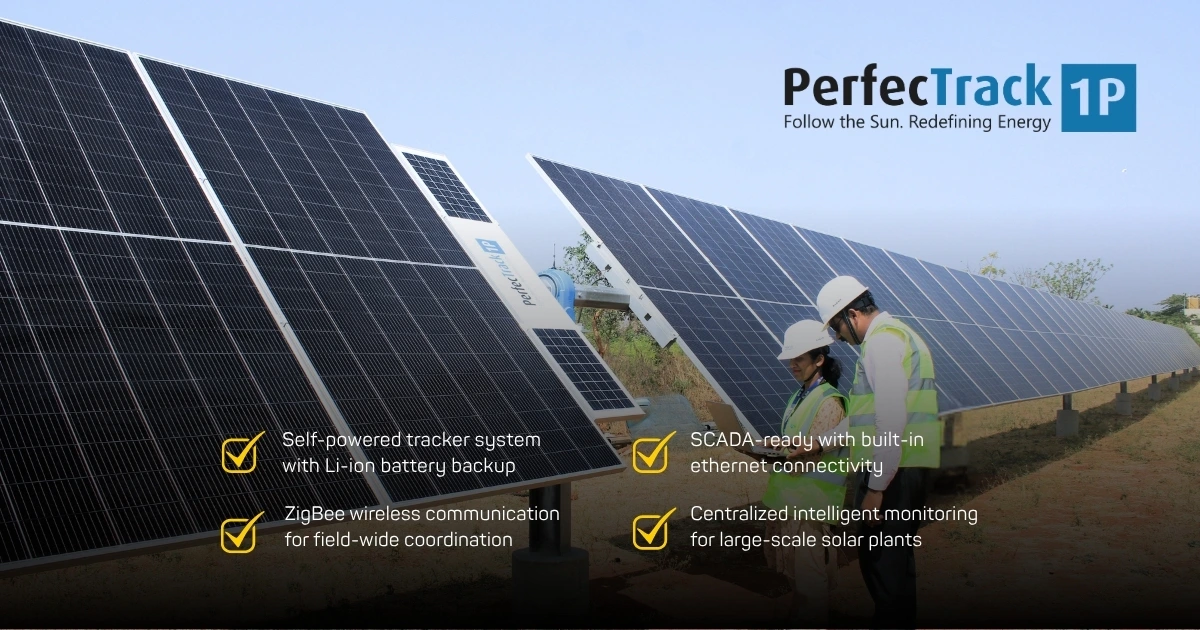
Take PerfecTrack-1P, for example. It’s engineered not just to track the sun—but to solve real operational challenges in solar plants.
Key Features That Define a Modern HSAT System
Based on the latest innovations in solar tracking, here’s what sets a high-performance horizontal single axis tracker apart:
1. Self-Powered Operation
One of the standout features is a self-powered tracking system with Li-ion battery backup. This ensures uninterrupted operation even in remote or off-grid solar farms, reducing dependency on external power sources.
2. Seamless Communication Across the Plant
Efficient coordination between tracker rows is essential for large installations.
With Zigbee wireless communication, trackers can:
Share real-time data across the field
Synchronize movement efficiently
Reduce wiring complexity and costs
3. SCADA-Ready Connectivity
Modern solar plants demand real-time visibility and control.
A robust HSAT system comes SCADA-ready with built-in Ethernet connectivity, enabling:
Remote monitoring
Performance analytics
Faster troubleshooting
4. Centralized Intelligent Monitoring
Managing thousands of panels across a solar farm can be complex.
That’s why centralized monitoring systems are critical. They allow operators to:
Track performance at scale
Identify inefficiencies instantly
Optimize energy generation across the entire plant
Built for Scale and Reliability
Horizontal single axis trackers are often deployed in large-scale projects, where reliability is non-negotiable.
Advanced systems like PerfecTrack–1P are designed with:
Strong structural components to withstand harsh weather
Intelligent algorithms to reduce shading losses
Minimal maintenance requirements for long-term operation
This combination ensures consistent performance even under demanding environmental conditions.
Why Horizontal Single Axis Trackers Are Gaining Popularity
The growing adoption of HSAT systems in India and globally is driven by clear advantages:
Higher energy yield compared to fixed-tilt systems
Better land utilization for large solar farms
Improved ROI through increased generation
Scalability for expanding solar projects
As solar developers aim to maximize returns without increasing land footprint, horizontal tracking systems are becoming the preferred choice.
A horizontal single axis solar tracker is no longer just an optional upgrade – it’s a strategic investment for modern solar projects.
With innovations like self-powered operation, wireless communication, and centralized monitoring, systems such as PerfecTrack-1P are redefining how solar plants operate.
For developers looking to build efficient, scalable, and future-ready solar installations, adopting advanced tracking technology is a step in the right direction.
Discover more on our website: https://perfectrack.in/
Stay tuned for more updates: https://www.linkedin.com/company/perfectrack/